Anxiety Treatment in Adolescents
Created by Jacqueline Zhai
Data Focus: Escitalopram Outcomes, Information, and Drug Trials
Purpose of This Page
This page is meant to help people understand how researchers study anxiety treatment outcomes. It focuses on escitalopram, also known as Lexapro, and its effects on adolescents with generalized anxiety disorder. The resources I picked below can be used to look at clinical study results, trial information, and general medication information.
What Kind of Data Is Collected?
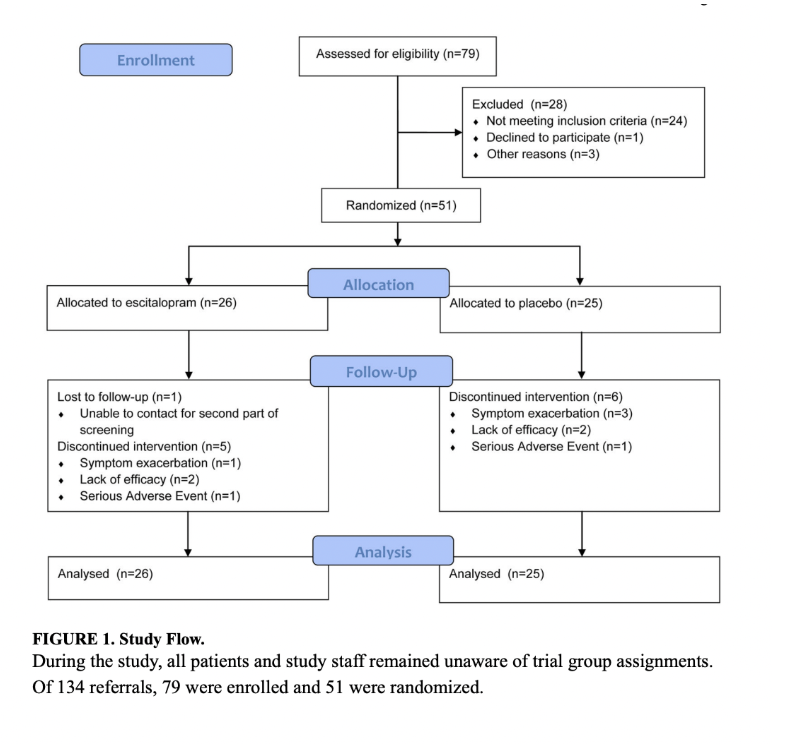
Figure 1. Flow of participants through the escitalopram study
One study in 2021 included 51 adolescents between the ages of 12 and 17 with generalized anxiety disorder. Twenty-six participants received escitalopram and 25 received a placebo for 8 weeks.
Researchers collected several types of information:
- Pediatric Anxiety Rating Scale (PARS) Scores
- Medication Dose
- Treatment Response
- Side Effects
- Differences in how patients metabolized the medication
Resource 1: PubMed Central

PubMed Central provides access to published medical and scientific research. The main study used on this page compares adolescents taking escitalopram with adolescents taking a placebo over 8 weeks.
This resource is useful for a reader who wants to know whether anxiety symptoms actually improved during treatment. They can compare PARS scores between the escitalopram and placebo groups, look at treatment response rates, and see how much symptoms changed over the 8 week study.
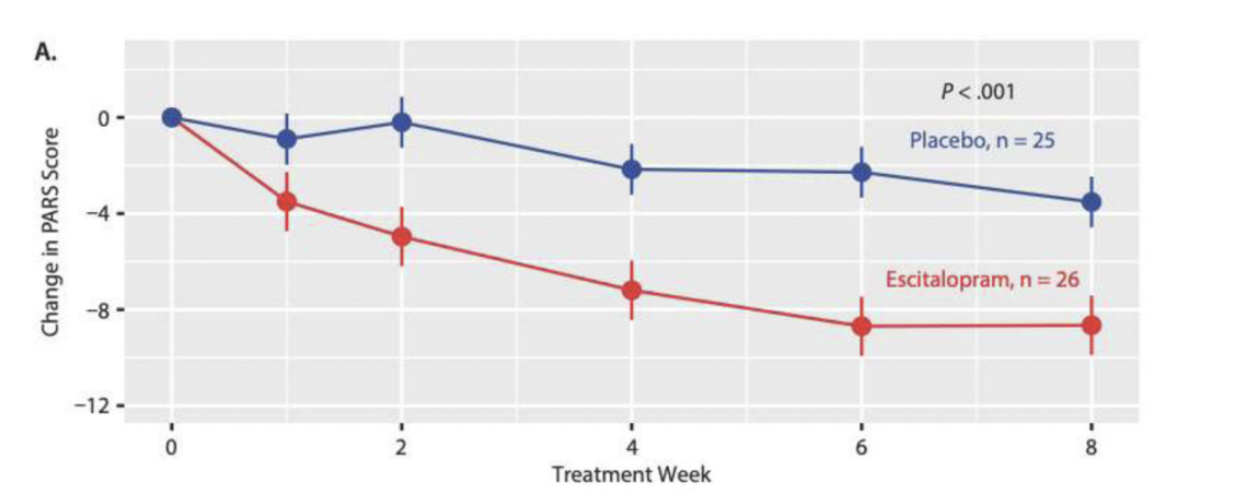
Figure 2. Change in PARS scores over 8 weeks.
What Does the Study Show?
After 8 weeks, PARS scores decreased by 8.65 points in the escitalopram group compared with 3.52 points in the placebo group. A larger decrease means that anxiety symptoms improved more.
About 62% of patients taking escitalopram responded to treatment, compared with 24% of patients taking placebo.
The results suggests that escitalopram was more effective than placebo in group, although not every patient responded in the same way.
Resource 2: ClinicalTrials.gov

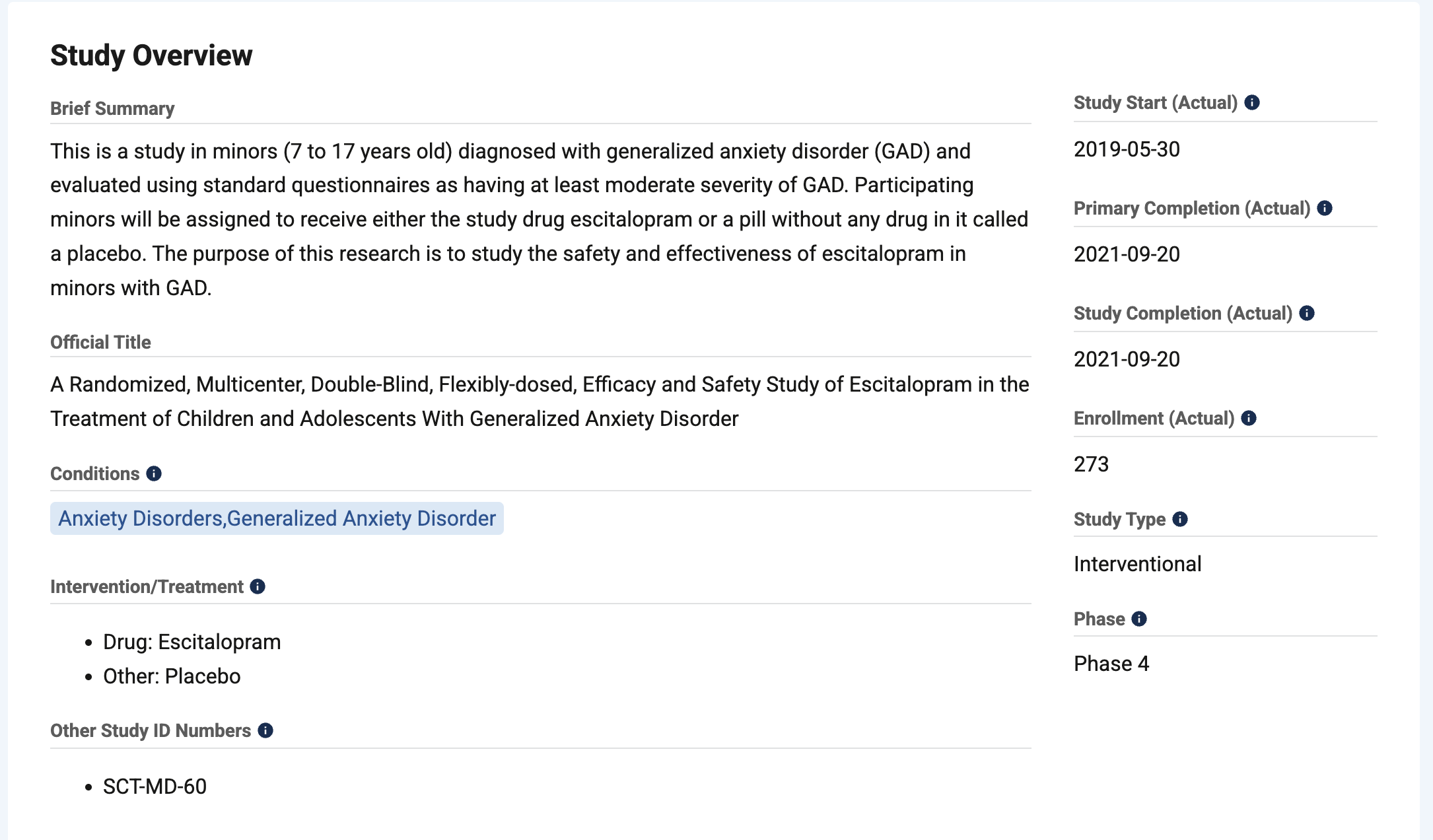
Figure 3. ClinicalTrials.gov study record for an escitalopram study in children and adolescents (7-17) with generalized anxiety disorder.
ClinicalTrials.gov is another useful resource for researching treatment outcomes. Instead of only showing a published article, it provides information about how a clinical trial was designed and conducted through its 4 phases.
A reader can use this page to understand how the study was designed before deciding how much weight to give the results. They can check the ages of the participants, the treatment groups, how long the study lasted, and which outcomes were measured.
This is also useful for comparing studies. A reader could look for another escitalopram trial and compare the participant ages, treatment length, or outcome measures. Differences in study design may help explain why two studies do not always produce exactly the same results.
Resource 3: MedlinePlus

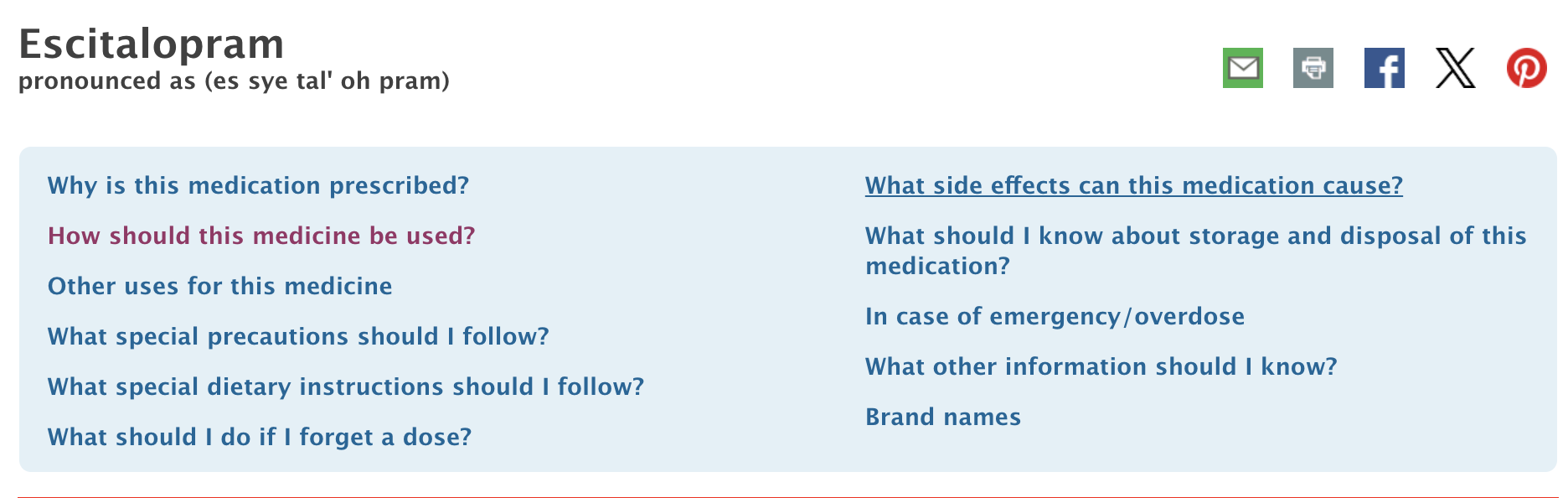
Figure 4. Escitalopram drug information from MedlinePlus.
MedlinePlus provides medication information written for patients and consumers. Its escitalopram page explains what the medication is used for and gives information about side effects and precautions.
The website explains that escitalopram is a selective serotonin reuptake inhibitor and is used by psychiatrists to treat generalized anxiety disorder and depression.
A reader can use MedlinePlus after looking at the clinical results to ask
a different question: even if the medication works, what else should be
considered? The site provides information about side effects, precautions,
and how escitalopram is normally used. This helps the reader balance
treatment benefits with possible risks.
Sample Analysis: Is Escitalopram Effective for Generalized Anxiety Disorder?
First, a reader can use PubMed Central to compare the PARS scores of the escitalopram and placebo groups. After eight weeks, PARS scores decreased by 8.65 points with escitalopram compared with 3.52 points with placebo. The response rates were also 62% compared with 24%. Together, these results suggest greater improvement with escitalopram.
Next, ClinicalTrials.gov can help the reader understand how the study was designed, including who participated, what treatments were compared, and what outcomes were measured. This helps give context to the results.
Finally, the reader can use MedlinePlus to add safety and medication information to the analysis. A treatment can improve symptoms but still have risks or side effects that matter when judging whether it is useful. MedlinePlus allows the reader to look at common side effects, precautions, and how escitalopram is normally used. This gives context that cannot be seen from the PARS graph alone.
Using all three resources leads to a more complete conclusion. PubMed Central shows that the escitalopram group had greater improvement in anxiety symptoms than the placebo group. ClinicalTrials.gov explains who was studied and how the trial was designed, which helps the reader judge how the results should be interpreted. MedlinePlus adds information about how the medication is used and what risks should also be considered. Together, these sources suggest that escitalopram can be effective for some adolescents with generalized anxiety disorder, but effectiveness is only one part of evaluating a treatment.